

When our dog Bernie was alive, she absolutely despised anything that beeped, chirped, or wailed like a siren. If smoke appeared in any media my wife or I were watching, we’d know when to mute, or skip ahead within a scene, knowing there would likely be a fire alarm and/or a siren to follow. If we were seconds too slow, or caught off guard, we’d be comforting her with “it’s okay, Bernie”s as her old bones pushed herself up to waddle to the bathroom, where she found it a safe spot to be on the bath mat between the tub and the wall.
We had to run a dehumidifier and had to remain mindful, manually shutting it off and emptying it before it reached its capacity. Otherwise, it would produce a beep alerting us to its need of emptying. And after such an unexpected irritation, or a startle, Bernie would move to her space. When controlling the noise a more stable environment could be had, so we would talk over the beep, or get her attention informing her it was coming (which would drastically increase the chances of her remaining in the room with us), so we’d often warn her of the “beep beep”, timing our “beep” over the audible beep it’d produce as well when manually shut off, or turned on.
So with time, repetition, ritual, the dehumidifier became known as the beep beep. “Did you empty the beep beep?” is something we’d say, which would be heard as nonsense to any other. To one outside, the sign has simply a correlation of beep beep = dehumidifier, but within there are multiple elements, us, our old dog, the sounds and circumstances, and the dehumidifier. Now that she is gone, we still refer to it as the beep beep and the term carries the memory of the events that produced it. The sign has a history, and that history has become part of its meaning.
I had recently finished reading Yuri Lotman’s Universe of the Mind, which is the first book devoted to semiotics that I’ve picked up after saving Semiotics: An Introductory Anthology from a box a bookstore left outside with a free notice, otherwise destined to be picked up with the garbage. Semiotics is often introduced through individual signs, where something, the sign, stands for something else. Lotman emphasizes the semiosphere, wherein signs and texts exist within larger systems of other signs, memories, conventions, and cultural languages, and where those systems themselves participate in producing meaning.
For Lotman, expressing something in another language is another way of understanding it. Sure, something is lost, or something shifts, but new relationships become possible in translation. (Translation from one language into another, but also translation in a semiotic sense, which we will touch on shortly). In this sense, meaning is not simply contained within an isolated sign. The beep beep means what it does because it belongs to a small world of relations. A stranger could learn that beep beep means dehumidifier without acquiring that history which makes it mean what it does to me.
Moving on from an expression with a history of a few years between two individuals, to a symbol whose history stretches across civilizations over hundreds or thousands of years is an entirely different matter.
Lotman illustrates with the example of Hamlet:
One might expect a text as it lives through the centuries to become faded and to lose the information
contained in it. Yet texts that preserve their cultural activity reveal a capacity to accumulate information, i.e. a capacity for memory. Nowadays Hamlet is not just a play by Shakespeare, but it is also the memory of all its interpretations, and what is more, it is also the memory of all those historical events which occurred outside the text but with which Shakespeare’s text can evoke associations. We may have forgotten what Shakespeare and his spectators knew, but we cannot forget what we have learnt since their time. And this is what gives the text new meanings.
(Note: It’s worth pointing out that “text” here does not just mean a written document. In the field of semiotics, a text is any organized whole of signs capable of carrying and generating meaning.)
This is what particularly stuck with me. We usually imagine preservation as keeping something unchanged as possible, as though memory were an archive containing a copy of the original, but Lotman’s living text does not survive by resisting everything that happens after it comes into creation. Some earlier associations are forgotten, later ones become unavoidable, and the text remains recognizably itself while becoming capable of meanings that were unavailable at the point of its creation.
Lotman also writes of semiospheres interacting with one another and gives special importance to their boundaries. The boundary is not just a line separating one semiotic space from another, it is also a mechanism of translation, where something entering from outside has to be made intelligible within the receiving system. In this crossing it is changed.
For illustration, imagine someone were charmed by this story about our dog and the dehumidifier, so they mentioned it to another person, and eventually they began calling their own dehumidifier, or maybe for better example, some other device entirely, the Beep Beep. The sign would have crossed into another semiotic world. It might retain some memory of where they first encountered it, being an in-joke between them, but their use would also begin accumulating experiences and associations of its own.
I could carry on completely ignorant of this unless one of them told me. The beep beep would still be recognizably the beep beep, but its meaning would no longer be exactly the same as mine. Its continuity would not depend upon remaining unchanged. Its capacity to change while remaining recognizable would be part of what allowed it to continue having a life.
Lotman describes something similar when writing specifically of durable cultural symbols. A symbol enters new contexts and is transformed by them while also transforming the context into which it enters. Its “invariancy is realized in variants.” The continuity is real, but the variations are not damages done to an original, or purer form.
Let’s look at the sign of Isis. I have been reading Pierre Hadot’s The Veil of Isis: An Essay on the History of the Idea of Nature, which traces the image of Isis and the veiled goddess from antiquity through centuries of European philosophy, art and literature. Hadot is not just writing a history of the Egyptian goddess. He shows how Isis became a personification of Nature, how her veil represents the secrets of Nature and the human desire either to uncover them or to contemplate what remains hidden, and how Isis came to represent Being itself.
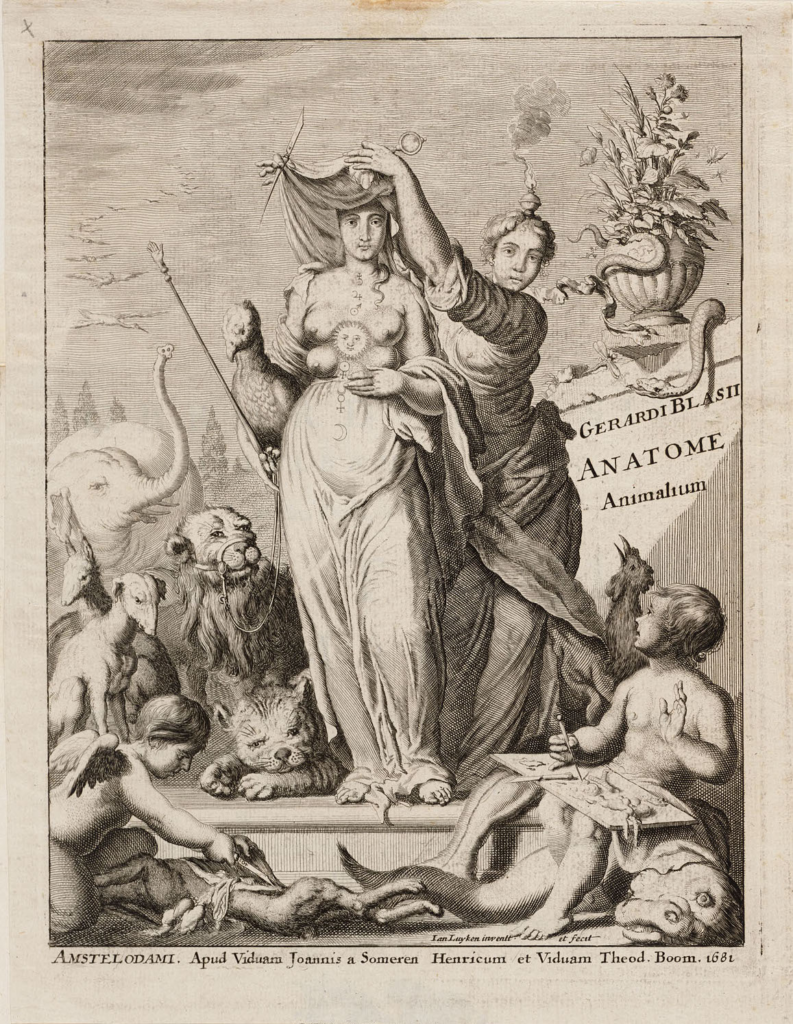
So the Isis worshipped in antiquity is obviously not identical to the Isis who later appears as an allegory of Nature, nor is it the Isis of European philosophy as depicted in science books, or the one encountered in Freemasonry, or in nineteenth-century occultism. The symbol travels and acquires new meaning while retaining enough continuity to remain recognizable, possessing enough of what is called its semantic reserve that no single context exhausts what it can mean.
This helped me in framing what I was feeling about Aleister Crowley’s use of Egyptian figures in his formulation of Thelema. A friend of mine has often taken slams at Crowley taking names and figures from Egypt, seeing only at the surface an English occultist adopting an exotic pantheon. Once they humourously told me “your magnetic-Egyptian hocus-pocus dream theatre doesn’t mean anything but distraction with petty symbolism”.
Crowley did not encounter ancient Egypt directly. He came into a European culture where Egypt had already been repeatedly translated over hundreds of years. Isis had already been Nature. The veil had already become a philosophical image for the hiddenness of Nature. Egyptian symbolism had already circulated through European esotericism and Freemasonry before Crowley entered the Golden Dawn at the end of the nineteenth century. This would culminate in 1904 when he would travel to Egypt and undergo the circumstances which brought about Thelema’s key text, the Book of the Law.
In The Sword of Song, he wrote that replacing Jehovah with the Egyptian Pantheon would simply be replacing the same thing by another name. When his use of Egyptian Gods was interpreted as praise or worship, he said he had wished to chant in verse “some aspects of the Universe” and summed up these “subtle forces finely”, and sang of them, he thought divinely, through their “name and form”, describing the method a little later as:
“By false things to expound the real.”
Crowley also says in the passage that Gods and devils are modes of his own mind, though I do not believe this means we can reduce everything he later says about magick and religion to psychology. What interests me here is the understanding that the name and form are not identical with whatever is being expressed through them. The image can be operative without exhausting what it is being used to disclose.
His later introduction to The Book of the Law becomes useful because he separates the idea from its symbolic clothing for us:
This Book explains the Universe.
The elements are Nuit— Space— that is, the total of possibilities of every kind— and Hadit, any point which has experience of these possibilities. (This idea is for literary convenience symbolized by the Egyptian Goddess Nuit, a woman bending over like the Arch of the Night Sky. Hadit is symbolized as a Winged Globe at the heart of Nuit.)
Every event is a uniting of some one monad with one of the experiences possible to it.
“Every man and every woman is a star,” that is, an aggregate of such experiences, constantly changing with each fresh event, which affects him or her either consciously or subconsciously.
Each one of us has thus an universe of his own, but it is the same universe for each one as soon as it includes all possible experience. This implies the extension of consciousness to include all other consciousness.
Crowley gives an abstract explanation, Nuit as Space and the total of possibilities of every kind, and then explicitly says that this idea is being symbolized “for literary convenience” by the Egyptian Goddess. Yet calling it literary convenience almost undersells what happens afterwards, because The Book of the Law does not continue speaking about a featureless abstraction called the total of possibilities. Nuit speaks, she loves, commands, bends over the world, identifies herself with Heaven and the stars, and enters into relation with Hadit. The symbolic form begins generating relationships which the abstract definition by itself could not.
One line in particular is worth highlighting in this reading of Hadot alongside Crowley. Nuit says in the Book of the Law:
Now, therefore, I am known to ye by my name Nuit, and to him by a secret name which I will give him when at last he knoweth me. Since I am Infinite Space, and the Infinite Stars thereof, do ye also thus. Bind nothing! Let there be no difference made among you between any one thing & any other thing; for thereby there cometh hurt.
Infinite Space. Infinite Stars... I.S.I.S. Today, many people understand this to be a reference to Isis. Crowley’s former secretary Kenneth Grant noticed this reading and perhaps popularized this, writing in Aleister Crowley and the Hidden God:
Nuit is the Great Outside, represented physically as “Infinite Space and the Infinite Stars thereof” — that is, I s i s. Nuit and Isis are thus identified in The Book of the Law. Isis is terrestrial space, illuminated by the stars. Nuit is outer, or infinite space, the undying darkness that is the hidden source of Light; She is also, in a mystical sense, Inner Space and the Great Within.
A later reader can bring another body of cultural memory to a text and encounter a relation which was not previously visible to them, while still being constrained by what is actually there. Infinite Space, Infinite Stars does produce the initials I.S.I.S. From the mythological lens, the Egyptian goddess Nut was the mother of Isis. In the age of internet discussions, many who have never read or encountered Grant have accepted and spread that “I am infinite Space, and the Infinite Stars” implies Isis.
This seems very close to Lotman’s Hamlet. A text can become capable of meanings unavailable, unnoticed, or plainly unimportant at an earlier time. The text has not finished generating its meaning.
Crowley was aware of the problem of inherited meaning. Liber LXI vel Causæ begins with a statement that now reads to me as a theory of symbolic language:
“Now the Great Work is one, and the Initiation is one,
and the Reward is one, however diverse are the symbols
wherein the Unutterable is clothed.”
Later, Liber LXI describes an attempt to construct an initiatory system using symbols common to different traditions while avoiding language which would impose a particular religion or metaphysical theory upon the student. The attempt proves impossible for the simple reason that “all language has a history.”
Deliberately, therefore, did he take refuge in vagueness. Not to veil the truth to the Neophyte, but to warn him against valuing non-essentials.
Even a word such as spirit, he points out, already carries philosophical and religious associations, from Scholastic Philosophy and the Hindu and Taoist
theories concerning the breath of man. The same applies to ordinary words such as order, circle, chapter, society and brotherhood. There is no neutral language waiting outside history that can communicate something without bringing previous uses along with it.
There is something almost funny about returning from this to the beep beep, but it is also why the example remains useful to me here. I happened to witness the entire history of that sign. I know why the sounds mean what they mean and which associations accumulated around them. With a word such as spirit, or a symbol such as Isis, I obviously arrive very late to the party hearing only subtle reverberations drowned out in layers of translations. The word is already populated by people I never met, arguments I have not read, uses I may not even know existed. Its history is there before me whether or not I am consciously aware of it.
Crowley’s solution in Liber LXI is not to abandon symbols because of this. After discovering the impossibility of neutral terminology, he says that he deliberately took “refuge in vagueness”, not in order to hide the truth from students, but to warn them against valuing non-essentials. If the name of an Egyptian, Buddhist, Hindu, Taoist, Jewish, Christian or Muslim God appears, the student should not immediately assume that the known theology attached to that name exhausts what is intended.
This becomes clearer in Liber Porta Lucis, where Crowley writes that throughout history adepts have tried to communicate what they had attained, only for their words to become altered by those who followed them until “again and again the Veil has fallen upon the Holy of Holies.” He then describes religions and philosophies as “symbols and veils of the Absolute Truth.”
It would be easy to stop there and conclude that because every system is symbolic, none of them really matter, or that all the symbols can simply be thrown together because behind them everything is One anyways. But Crowley immediately complicates this by saying that “in the beginning one system may be suited for one seeker, another for another.”
That qualification is important. The fact that the symbol is not the thing itself does not mean the symbol is unnecessary. The fact that a language cannot say everything does not mean we understand more by refusing to learn any language. A system may be provisional while still needing to be entered deeply enough for its relationships to become meaningful. There is an important difference between eventually seeing the limitations of a symbolic system and simply never having entered it deeply enough to discover what it can do.
Hadot’s The Veil of Isis points out that the veil does not only conceal. It can also give what is hidden a surface upon which to appear. Isis veiled as Nature may hide Nature’s secrets, but the veil itself became an image through which people could think about Nature, knowledge, scientific investigation, contemplation and the limits of what human beings can know. The veil generated thought precisely because it gave the problem a form.
Crowley touches upon this in Liber B vel Magi. Here the difficulty is no longer that every word arrives carrying a cultural history. The act of putting something into language is itself a limitation. The Magus speaks Truth, but in speaking sends forth “Illusion and Falsehood” to “enslave the soul”. Crowley later writes that “the Word is falsehood, and the Understanding darkness.” Yet it is nevertheless written because there are times of darkness when it may serve “as a lamp therein.”
The idea of the lamp useful. The lamp is not broad daylight. What it illumines depends upon where it is placed, and there will always be something outside its range, but this does not make lamps useless. In darkness, their limitation is exactly what allows some portion of the world to be seen so that we can navigate it more safely.
Perhaps the symbol works similarly. Giving something a word, image, God-form or philosophical structure cannot reproduce the whole thing without remainder, but without some form there may be nothing available for us to communicate, compare, contemplate or place in relation to anything else. The limitations of the lamp to illuminate everything does not mean we see more clearly by putting it out.
Returning to the The Book of the Law, Hadit says:
“Now let there be a veiling of this shrine: now let the light devour men and eat them up with blindness!”
Now illumination itself can blind. The opposition between veil and revelation has become less simple. One can be concealed in darkness, but one can also be blinded by too much light, or by a light one has mistaken for the whole.
Neither Lotman nor Crowley allows us to imagine language as a transparent container in which meaning is placed and then transported unchanged. Something happens in transmission. For Crowley too, something should happen in the person receiving, or translating it, to use Lotman’s terminology.
In Magick Without Tears, while discussing the assimilation of experience, Crowley writes: “Every accretion must modify me. I want it to do so.” What is encountered enters his Temple and changes it, while the thing encountered is also modified by him “in the act of union.” Every experience is a “play of Nuit.”
Lotman describes a symbol entering a new context, transforming it and being transformed by it. Crowley describes experience entering the individual, modifying the Temple and being modified through its assimilation into that Temple. In neither case does its strength lie in remaining untouched.
This returned me to a Crowley phrase I had repeated often before reading Lotman but which began to mean something different afterwards. In The Book of Thoth, while discussing equilibrium, he writes that “change is stability”, eventually putting it in both directions:
“Change guarantees stability. Stability guarantees change.”
Crowley is not discussing semiotics there, but the phrase is appropriate to the life of a sign. A symbol which could never acquire another relation would eventually belong only to the environment that produced it. A symbol which could change without any continuity at all would cease to be recognizable as the same symbol. Without any further transmission, the beep beep may only have a life for as long as a dehumidifer remains useful to us and the expression remains part of our shared language. But if it crosses into another semiosphere, as imagined earlier, something of it may continue under changed circumstances.
This changing does not mean that anything can mean anything. If I announce that Isis now means a dehumidifer, the fact that meanings change through history does not give the claim any substance. The history of the sign constrains what can plausibly be done with it. New meanings arise through relationships with what was already there. Now if a brand of dehumifiers called Isis were to hit the market, this may open up in time as a plausible meaning.
This is perhaps what I am coming to understand as the difference between a sign having a definition and a sign having a life. If someone asks what the beep beep means, I can answer dehumidifier, and that answer is correct. But it does not explain why the sign exists, why my wife understands it, why another person would not, or why it means something slightly different to us now than it did when Bernie was alive. Bernie is not referred to in the words beep beep, it doesn’t secretly mean Bernie… Yet Bernie is in it.
Lotman’s Hamlet has had centuries to acquire meaning. Isis has had millennia. The beep beep has had a few years. The scale is drastically different, but this is what makes the example useful. I happened to be there when the sign began and can see in micro something which becomes increasingly difficult to see once a symbol has accumulated centuries of cultural memory around itself.
This is what I think I had missed when I first began reading semiotics as only the study of signs standing for things. A sign does not only point. It enters relationships, carries previous relationships with it, accumulates memory, crosses boundaries and becomes capable of relations which were not present at its beginning. Its history is not merely something that happened to the sign while its real meaning remained untouched underneath. The history becomes part of what it means. And the text has not finished generating meaning until it is completely forgotten and no longer used.
I had wanted to go into further material covered in Hadot’s Veil of Isis but will have to do so in another article. However plucking one final relevant piece, Hadot structured his essay around Heraclitus’ aphorism “Φύσις κρύπτεσθαι φιλεῖ” (“Nature loves to hide”). After tracing what those three words were capable of becoming across twenty-five centuries, in the conclusion, he raises what Nietzsche said of a good maxim:
“A good maxim is hard for the teeth of time, and all the millennia cannot succeed in consuming it, though it always serves as nourishment; it is thereby the great paradox of literature: the imperishable in the midst of all that changes, the food that always remains appreciated, like salt, and again like salt, never becomes insipid.”
This seems very close to what I have been touching uponthrough Lotman’s semantic reserve, and Crowley’s intentional ambiguity. It does not necessarily mean that every later meaning was secretly placed there by the original author, waiting for the right person to uncover it. (Though in the case of Crowley, we know he intended on such a thing and demonstrated it within his own commentaries of his works).
A living formula can retain enough structure, ambiguity and life to continue forming new relations as the world around it changes. Its continuation and its changing are not opposites.
It made me think of Crowley’s teaching’s condensed Maxim:
“Do what thou wilt shall be the whole of the Law. Love is the law, love under will.”
I shall now go empty the beep beep.